
Peritoneal Dialysis (PD) Catheter
Peritoneal Dialysis (PD) Catheter Placement & Care Specialists in Arizona
What Is Peritoneal Dialysis?
Peritoneal dialysis, or PD, is a home-based dialysis treatment that uses the lining of your abdomen (the peritoneum) to filter waste and extra fluid from your body. Many patients choose PD because it allows treatment in a familiar environment and provides more flexibility in daily routines.
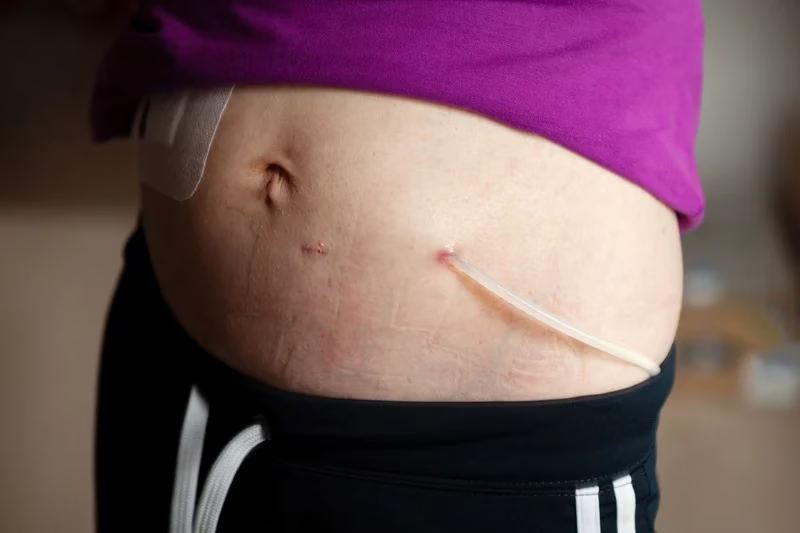
To perform PD safely, you need a peritoneal dialysis catheter. This soft, flexible tube is placed into your abdomen during a short, minimally invasive procedure.
What Is PD Catheter Placement?
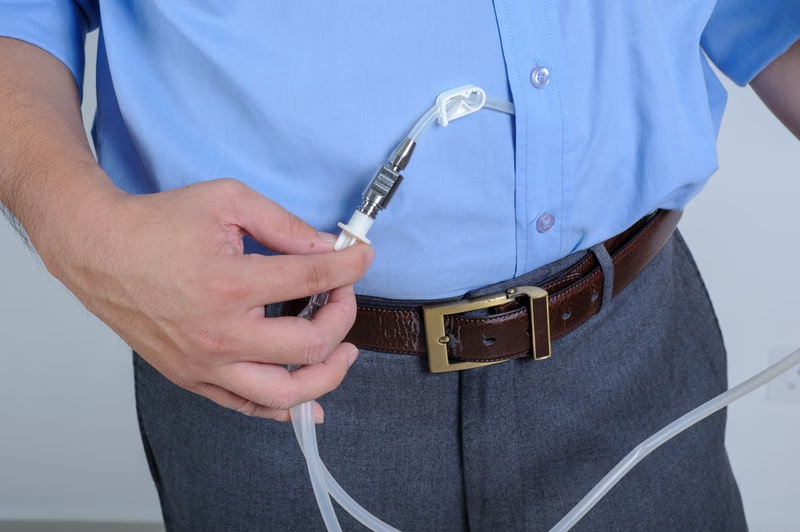
PD catheter placement is a sterile procedure that creates long-term access for peritoneal dialysis. The catheter is positioned inside the abdominal cavity, with a small portion exiting the skin so you can connect it to your PD equipment at home.
Successful placement is important for long-term comfort, proper drainage, and effective treatment.
Types of PD Catheter Placement
Your provider will recommend the approach that is safest and most appropriate for your health needs.
Percutaneous Placement (Preferred Approach at SKI Vascular Center): A minimally invasive method often performed in an outpatient setting with local anesthesia. Benefits of the percutaneous approach:
- No hospital admission needed
- No general anesthesia required
- Faster healing compared to surgical options
- Ready for low-volume PD exchanges within a few days, depending on clinical factors
- Similar success rates to surgical placement
Laparoscopic Surgical Placement: A minimally invasive surgical option. What to expect
- Performed under general anesthesia
- Small incisions are created to allow the surgeon to view and place the catheter
- May be recommended if you have had prior abdominal surgeries or scar tissue
- PD can typically begin in about two weeks
Open Surgical Placement: Used when patients have a history of hernias or significant scar tissue. What to expect
- Performed under local or general anesthesia
- One or more incisions are made to place the catheter
- Slightly longer recovery time
- PD usually begins in about two weeks
PD Catheter Placement at SKI Vascular
At SKI Vascular Center, patients receive care from an experienced team of vascular and surgical specialists who focus on kidney-related procedures every day. Our center provides a safe and comfortable outpatient setting, which allows most patients to return home shortly after their procedure without the stress of a hospital stay.
We follow a standardized, image-guided technique to position the catheter and verify its function before you leave the center. We monitor early function closely, since some catheters need adjustment or additional procedures to work optimally.
We also educate you on how to care for it so you can feel more confident as you begin peritoneal dialysis at home. Our goal is to make the transition to PD as smooth as possible while supporting your long-term health and treatment success.